
2024.12.06.
News / Post Page
Collagen injection therapy for joint and tissue health
Collagen is one of the most important proteins in the human body. It is an essential building block of connective tissues, tendons, ligaments, cartilage and skin. When collagen is lost, the body loses elasticity, strength and stability. Its production is negatively affected by excessive physical stress or certain injuries. These factors reduce collagen production, which also declines steadily with age. The effects are visible in everyday wrinkles, joint pain, reduced range of motion and degenerative changes.
Collagen injection is a modern treatment that effectively replaces the missing collagen directly where it is needed most. This effective, quick and painless treatment is becoming increasingly popular not only among people suffering from chronic joint pain, but also among those who want to prevent similar problems from occurring in the first place.
What is collagen and what role does it play in the body?
Collagen is a structural protein that makes up roughly 30% of all the proteins in the body and up to 70% of the protein in the skin. It is a major component of our connective tissues, including:
Tendons and ligaments: they are responsible for the connection between muscles and bones, they allow movement.
Porc: collagen forms the protective layer between the bones in joints. Prevents bone wear by forming a fluid between the two bones that helps them move
Leather: collagen is responsible for the luminosity, firmness and elasticity of our skin, and also ensures its regenerative capacity,
Bones: gives them resilience and resistance
Erek: collagen allows blood vessels to be elastic and is responsible for their high tensile strength
Intercellular material: in the form of collagen fibres that form bundles.
What happens in case of collagen deficiency?
After the age of 25, the body's collagen production naturally starts to decline. This leads to a gradual weakening of the tissues, which affects the overall health and functionality of the body.
This process a natural part of ageing, but its effects are much stronger when combined with other factors (such as poor diet, stress or health problems).
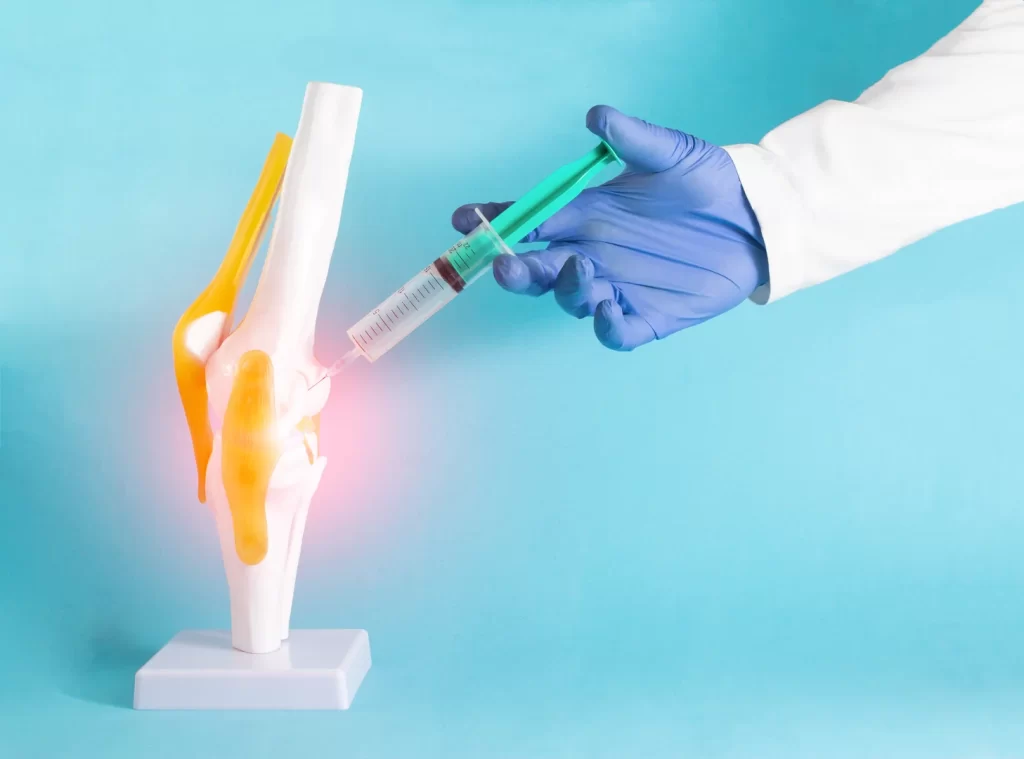
Collagen therapy: the modern health solution
Collagen injections are one of the most effective ways to replace collagen. This therapy is simple, safe and painless, making it popular with patients and professionals alike.
How does collagen injection work?
Collagen injections help tissue regeneration and alleviate problems associated with wear and tear on joints, tendons and ligaments. The main benefit is the targeted effect on the affected area, which promotes effective repair and regeneration of damaged structures.
Collagen therapy involves injecting bioactive collagen into the affected area. This precision allows the collagen to work in situ (most commonly used for knee and spinal conditions). This makes it possible to minimise side effects and increase the effectiveness of the treatment.
The mechanism of action of the injectable can be divided into two main stages
Repair of damaged tissue
The collagen injected in the injection acts as a direct building material for the damaged area. Think of collagen as the scaffolding on a construction site that supports and holds weakened or damaged tissue.
Once injected, the bioactive collagen is incorporated into the site of damage, where it helps restore tissue structure and function. This process is particularly important in conditions where there are micro-tears in the tendons, weakened ligaments or articular cartilage loss.
This regenerative ability is particularly valuable in degenerative diseases such as osteoarthrosis (articular cartilage wear), in which case collagen helps to reduce cartilage wear and restore elasticity and strength. The same is true for tendon or ligament injuries, where the injection helps regeneration, shortening the healing time.
Stimulating natural collagen production
In addition to directly promoting tissue repair, collagen delivered externally to the body has the unique ability to stimulate the body's own collagen production. Once injected, the collagen stimulates fibroblasts (special connective tissue cells), which begin to produce collagen naturally.
The effect of collagen injection treatment
The combination of the two processes results in rapid pain relief, improved mobility and strengthening of the affected area. In addition, collagen injections are not just a symptomatic treatment. Unlike traditional painkillers or corticosteroids (which only reduce inflammation and pain), collagen treats the underlying cause, the tissue damage.
This treatment is painless or involves minimal pain, as the patient receives an injection. The treatments take place without a long recovery phase. By activating the body's natural regenerative mechanisms, collagen therapy has a long-term effect that significantly improves patients' quality of life.
The benefits of collagen therapy:
Quick pain relief: improves blood supply and blood flow to the affected areas and reduces inflammation.
Improves mobility: promotes the regeneration of cartilage, tendons and ligaments.
Prevents degeneration: slows down the process of tissue deterioration.
Simple to use: The procedure takes just a few minutes and there is no long recovery time.
Possible uses of collagen injection
Collagen injections are used in various areas of medicine:
Injections in the knee
The knee is one of the joints under the most stress and is often worn or damaged. Many patients develop arthrosis (cartilage wear) as a result of overuse.
Injections into the spine
In cases of pain caused by disc degeneration or ligament damage, collagen injections are an excellent alternative to traditional procedures.
Tendons and ligaments
Collagen therapy speeds up recovery from injuries such as pulled or torn tendons and reduces the risk of long-term complications
Comparing collagen therapy with other treatment options
Collagen injections are often compared with other joint and connective tissue treatment methods such as corticosteroids, hyaluronic acid injections or surgery. Each of these methods has its advantages and disadvantages, so it is important to carefully consider which option is best for a particular health problem.
Collagen injections stand out because they work quickly and help damaged tissue regenerate. Unlike corticosteroids, which only relieve inflammation and pain, collagen directly restores tissue structure, so it treats the cause of the problem, not just the symptoms. In contrast to hyaluronic acid injections, which primarily improve cartilage hydration, collagen injections are more effective for more severe tissue damage.
On the other hand, joint surgery is used to treat serious and irreversible conditions, but it requires a long recovery time and carries a risk of complications. Collagen therapy is less invasive and does not require hospitalisation, making it an ideal choice for patients looking for a safe and effective alternative without side effects.
Although collagen injections can be more expensive and require repeated applications, the long-term benefits for joint health, mobility and quality of life make them worth the investment.
Collagen and Ayurveda
Ayurveda focuses on the natural regeneration and rebalancing of the body. Collagen therapy is in line with this principle as it supports natural healing processes.
Alternative sources of collagen in Ayurveda:
Collagen-rich nutrition: Eat fish, eggs and citrus fruits rich in vitamin C.
Ayurvedic herbs: Shatavari, amla and boswellia promote connective tissue regeneration.
Panchakarma: Detoxification processes that help to better utilize nutrients and remove toxins that have accumulated in the body.

Collagen injections at the Calendula Clinic
In our Ayurvedic clinic, we combine modern therapies (such as collagen therapy) with traditional Eastern medicine.
Professional diagnostics, personalised mapping of the patient's condition
Our offer ranges from expert diagnostics to a thorough assessment of the patient's individual condition to combined treatments that use a harmony of injection therapy, herbs and detox treatments for the best results.
A personalised approach
A treatment that takes into account your individual health and treats the body as a whole. For more information about collagen therapy and available appointments, please contact our colleagues!





Thank you!
Your reservation request has been successfully recorded!
Our colleagues will contact you soon!